
Blount County Property Tax Search
Blount County property tax records are kept by the Revenue Commissioner in Oneonta. Located north of Birmingham, this scenic county has a mix of rural farms, small towns, and growing subdivisions.
Blount County Quick Facts
Blount County Revenue Commissioner
Gregg Armstrong serves as Revenue Commissioner for Blount County. His office handles property tax assessments, collections, and related duties. Staff can help you search records, apply for exemptions, pay taxes, and get answers to property questions. The office also handles motor vehicle tags and business personal property.
The Revenue Commissioner office sits in the Blount County Courthouse in downtown Oneonta. You can visit in person or use the online portal for many tasks. The county uses ALTAGS software, which provides online access to property records and tax payments. Staff are helpful and can guide you through the process if you have questions about your property tax records in Blount County.
| Office | Blount County Revenue Commissioner |
|---|---|
| Official | Gregg Armstrong |
| Address | 220 2nd Avenue East, Suite 106 Oneonta, AL 35121 |
| Phone | (205) 973-0285 |
| Hours | Monday through Friday, 8:00 AM to 4:30 PM |
| Website | altags.com/blount_license |
How to Search Blount County Property Tax Records
You can search property tax records in Blount County online or in person. The online search is free and fast. Most people start there. In-person visits are better if you need certified copies or have complex questions about valuations.
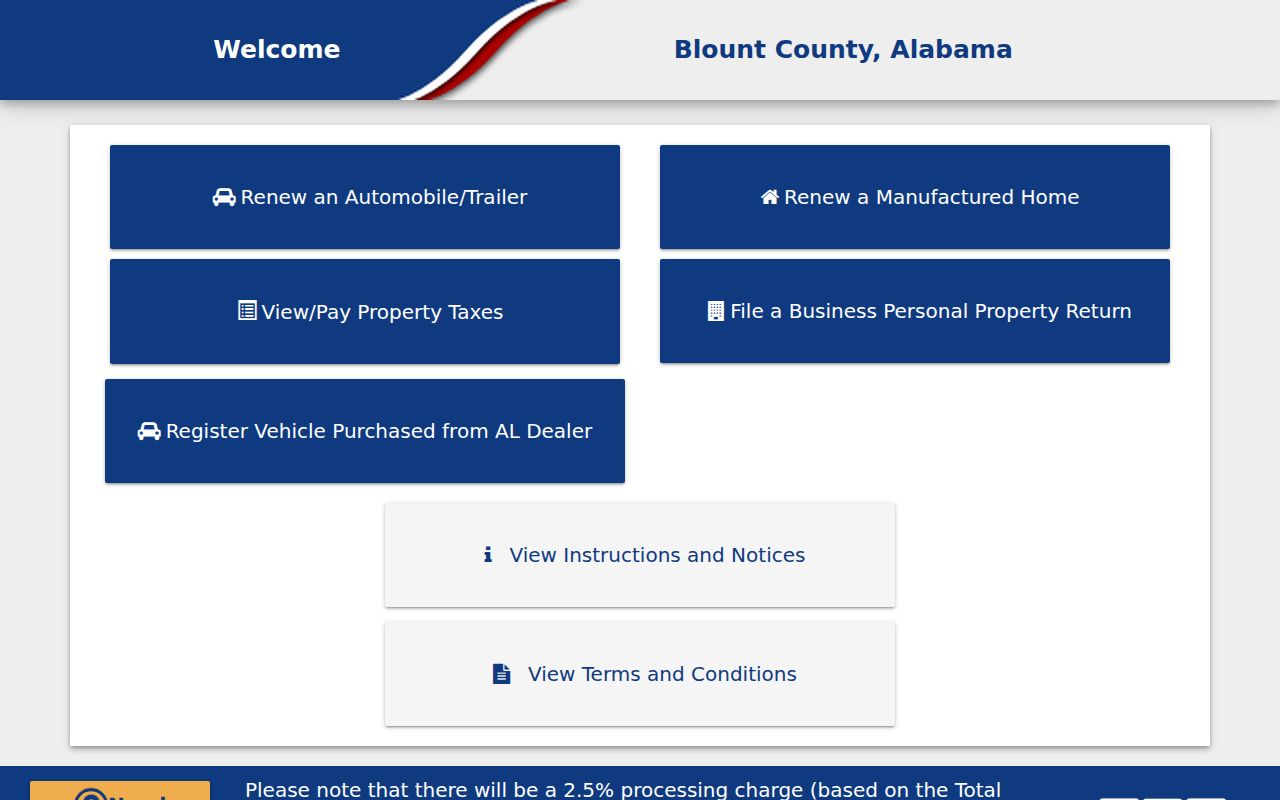
The ALTAGS portal lets you search by owner name, address, or parcel number. Results show assessed values, tax amounts, and basic property info. You can view your tax bill and even pay online. The site covers all real property in Blount County from residential homes to farms to commercial buildings.
To search Blount County property records online:
- Go to the county portal
- Enter owner name, address, or parcel ID
- Click Search
- Select a property to see details
For in-person searches, visit the Revenue Commissioner at the courthouse. Staff can look up any property and print records. Bring whatever info you have like an address or owner name. The office can also help with questions about exemptions, appeals, and payment options in Blount County.
Blount County Property Tax Rates
Property tax rates in Blount County depend on location. The state sets a base of 6.5 mills. Blount County adds its own rate. School districts add more. If you are in a city like Oneonta or Cleveland, city millage applies too. Your total rate is the sum of all these.
Alabama uses a three-class system for assessment. Homes are Class III and assessed at 10% of market value. Commercial property is Class II at 20%. Utilities are Class I at 30%. So a home worth $200,000 has an assessed value of $20,000. Your tax is calculated on that lower number in Blount County.
Typical millage components:
- State: 6.5 mills
- County general: varies
- County schools: varies by district
- City: if inside city limits
Blount County has low property taxes compared to most states. The median annual bill for a home is a few hundred dollars. This is because Alabama's class system keeps assessed values low. Under Code of Alabama Section 40-8-1, property must be valued at fair market value, but only a fraction is taxed.
Property Assessment in Blount County
The Revenue Commissioner values all real property in Blount County. The lien date is October 1. Your property value on that date sets your tax bill for the following year. If you build, demolish, or change your property, the value updates on the next lien date.
Alabama law requires counties to reappraise property every four years. Each year, roughly 25% of Blount County parcels get reviewed. Appraisers check sales data and may visit properties. When your area comes up in the cycle, your value could change. The county mails notices when values increase.
How assessment works:
- Appraisers set fair market value
- Multiply by class rate (10%, 20%, or 30%)
- Result is assessed value
- Apply millage rates for tax amount
Starting in 2025, Alabama caps annual assessment increases at 7%. This protects owners from big jumps when the market heats up. Blount County has seen growth from people moving out of Birmingham, so this cap may help many homeowners. It does not apply to new construction.
Paying Property Taxes in Blount County
Property taxes in Blount County come due October 1 each year. You have until December 31 to pay without penalty. After that, interest starts adding up. The county mails tax bills in the fall. Check yours online if you do not receive a paper copy.
Blount County offers several payment methods. Online is fastest. Go to the county portal and use a card or e-check. You can also pay in person at the Revenue Commissioner office. Mail a check with your payment stub if you prefer. Each method works for regular payments.
Ways to pay Blount County property taxes:
- Online through the county portal
- In person at the courthouse
- By mail with check
- Drop box at the courthouse
If you miss the deadline, interest accrues at 1% per month under Alabama law. After several years, the county can sell your property at a tax sale. If you have trouble paying, contact the Revenue Commissioner. They may have options to help you catch up in Blount County.
Property Tax Exemptions in Blount County
Blount County residents can apply for exemptions that lower property taxes. The homestead exemption is most common. It reduces the county portion of your bill if you own and live in the home. Apply at the Revenue Commissioner office before December 31 to get it for the next year.
Seniors age 65 and over qualify for extra relief under Code of Alabama Section 40-9-19. Disabled persons and veterans with 100% disability ratings also get exemptions. Each has its own rules and paperwork.
Exemptions in Blount County:
- Homestead: for owner-occupied primary residence
- Senior (65+): additional tax relief
- Disability: for permanent total disability
- Veteran: for 100% service-connected disability
- Current use: for farm and timber land
Current use valuation helps farmers and timber owners. Land is taxed on its productive value, not development potential. This can save thousands on rural property. Apply at the Revenue Commissioner with proof of agricultural use in Blount County.
Appealing Your Property Assessment in Blount County
Think your property is valued too high? You can appeal. Start by talking to the Revenue Commissioner. Many issues get resolved with a conversation. If not, file a formal appeal with the Board of Equalization before the spring deadline.
Under Code of Alabama Section 40-3-24, you have the right to appeal. Gather evidence: comparable sales, an appraisal, or photos showing problems. Present your case clearly to the board at the hearing.
Appeal steps in Blount County:
- Review your assessment notice
- Gather evidence of lower value
- Talk to the Revenue Commissioner first
- File written appeal if needed
- Attend Board of Equalization hearing
The board meets in spring. Present your facts and let them decide. They can lower, raise, or keep your value. Most prepared appeals succeed. If you lose, you can appeal to circuit court, but that is uncommon in Blount County.
Related Property Records in Blount County
The Revenue Commissioner keeps tax records, but other offices hold related documents. The Probate Court has deeds, mortgages, and ownership history. For title research, go there. The Probate Court is in the same courthouse.
Blount County has GIS mapping for parcel boundaries and aerial photos. The maps connect to tax records so you can view both together. This helps when you want to see exactly what a property looks like and where the lines fall.
Other property offices in Blount County:
- Probate Court: deeds, mortgages, liens
- GIS: parcel maps, aerials
- Building Department: permits, inspections
- Planning: zoning, land use
Blount County sits in the foothills of the Appalachians with covered bridges and natural beauty. If you are buying property here, check flood zones, road access, and easements along with tax records.
Cities in Blount County
Blount County has several small cities and towns. All property taxes go through the county Revenue Commissioner. Cities may add millage but do not handle assessment or collection.
Communities include Oneonta (county seat), Cleveland, Locust Fork, Blountsville, and Hayden. Oneonta is the largest with about 6,500 residents. None have populations over 100,000, so all property tax matters go through the Blount County office.
Nearby Counties
These counties border Blount County. Each has its own Revenue Commissioner and rates.